Every role on your team has a view built for them
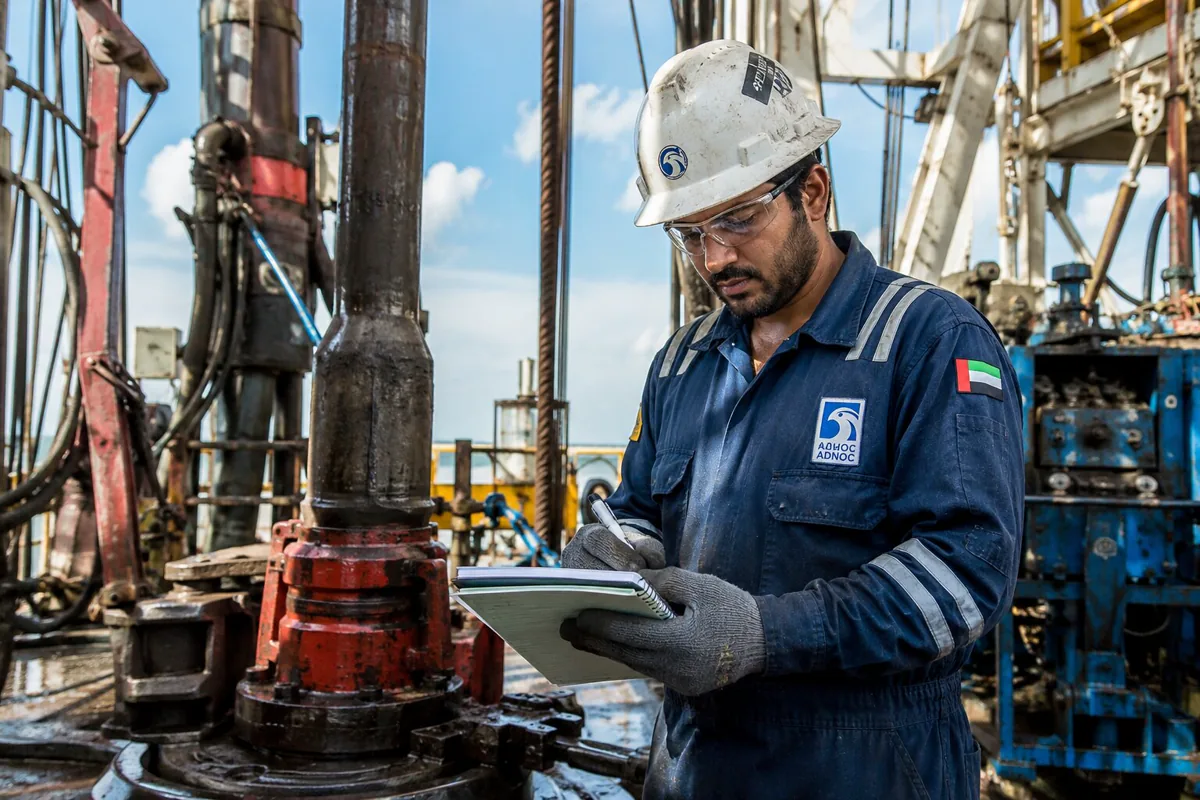
Drilling Engineers
Pull offset-well learnings before spud. Surface casing failures, mud losses, and kick indicators from a decade of wells — in minutes, not weeks.
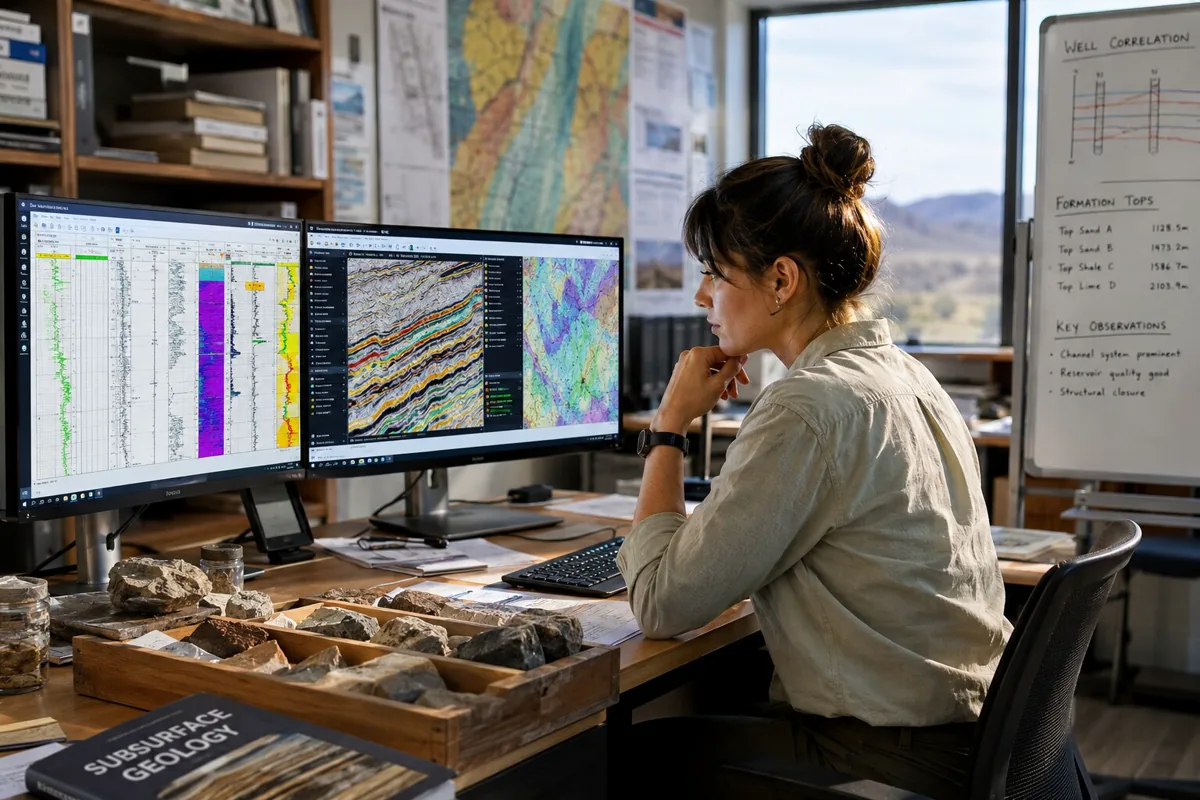
Geologists & Geoscientists
Browse formation tops, core descriptions, and LAS interpretations across your entire portfolio. Every entity cross-referenced across documents.
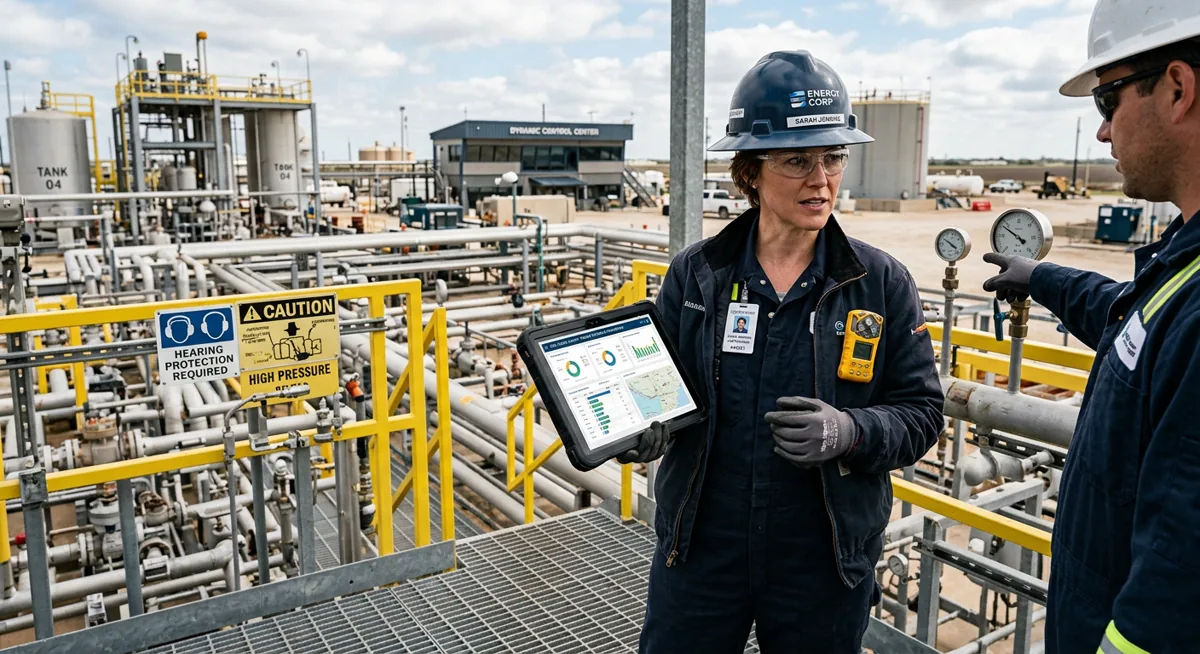
Asset Managers
Get the weekly portfolio delta without digging through inbox threads. Understand what changed, what's at risk, and what needs attention — at a glance.
Beyond these three
Adaptable and extendable for every role in the domain
Nothing here is hard-wired to a job title. Projects, document classes, and report templates are configurable — so the same library answers whoever is asking, in the terms they ask it.
Your drilling knowledge already exists. It’s just trapped inside documents.
Every well you have drilled was written down. The mechanism behind this month’s stuck pipe is almost certainly described in an end-of-well report filed years ago — findable today only by the engineer who happens to remember writing it.
What you already have
What that costs you
- 1,000+
- pages of reporting per campaign
- Hundreds
- of engineering decisions, each recorded exactly once
- Zero
- ways to ask all of them a question at the same time
Finding it today
- 01Open the DDR
- 02Ctrl+F
- 03Scan the pages
- 04Open the next report
- 05Repeat ×40
Hours per question — and you only ever check the wells you remembered to check.
Finding it with WellSynth
- 01Ask the question
- 02Read the evidence
- 03See the pattern
- 04Decide
Every report in the library is consulted on every question, whether you remembered it or not.
Upload the reports. Interrogate the field.
No RAG pipeline to configure, no ontology to define, no schema to map. Five stages, and you only ever operate the first and the last two.
WellSynth handles the heavy lifting — parsing, structuring, linking and surfacing patterns — so you can move from documents to decisions, faster.
Your engineering documents
PDFs from your desktop or a shared drive. Multi-file batches, live per-page progress.
Entities, events, relationships
Formation tops, casing strings, NPT events and LAS mnemonics are read as engineering objects — and linked across wells.
Ask the whole library at once
One well, a field, or the entire archive. Answers are composed from your documents and cited to the page.
Patterns, NPT and lessons
Recurring failures never announce themselves inside one report. Grouped across the library, the repeat offenders surface.
Carry the evidence out
Evidence pack, branded report, or a read-only link for people without an account. Every claim keeps its source.
Parsing
Multi-format document parsingEntity extraction
Domain entities identifiedLinking
Cross-well & cross-document linkingRetrieval
Semantic search across libraryPattern detection
Anomaly, recurrence & trend detectionSee every capability in depth.
Step-by-step walkthrough of every feature, with screenshots.“How do I know this isn’t hallucinated?”
Because you can check. Every claim carries the document, section and page it came from — hover any sentence below and the source it was drawn from opens beside it. What the system cannot ground in your documents, it declines to say.
What are you trying to find?
Nobody arrives wanting a feature. They arrive with a question and a deadline. These are the five that bring engineers here — each one is a thing the platform does, phrased the way you would actually ask for it.
Find NPT
What were the main causes of NPT in this field?
Investigate a problem
What caused the losses in the 8½" section on Tasman-4?
Surface lessons learned
What did we learn about hole cleaning on the last five wells?
Compare wells
How did section times compare across the campaign?
Search the archive
Where have we seen this fluid loss signature before?
Trained to speak petroleum engineering.
Formation tops, LAS mnemonics, casing programs, mud-weight gradients — the vocabulary a generic AI tool skims past or invents. Every entity on the drawing beside this was read out of a report, not typed into a form.
Your documents stay yours. Provably.
Subsurface data is commercially sensitive, so the platform is built to make the boring answer — “it never leaves your tenant” — the true one.
Tenant-isolated by architecture
Each workspace runs against its own isolated document store. No cross-tenant retrieval, ever.
Answers bounded to your library
Retrieval only reaches documents you uploaded — the model can't cite what isn't yours.
No training on your data
An enterprise licence from Google covers data privacy — your documents are never used to train shared models.
Governed access
Confidentiality tags, artifact classes, and revision tracking control who sees what — and when it changed.
Encrypted on Azure infrastructure
Data is encrypted in transit and at rest on Microsoft Azure.
The questions operators actually ask
Something else on your mind? Ask the team directly.
What happens to our documents?
They live in your tenant-isolated workspace and are used for exactly one thing: answering your team's questions. They are never shared across tenants and never used to train shared models.
How do we know an answer isn't hallucinated?
Every claim in every answer links to the exact source page it was drawn from. If a statement can't be grounded in your documents, the system says so instead of inventing one — and your engineers can verify any line in one click.
What file types do you support?
PDF well documentation today — end-of-well reports, daily drilling reports, logs, HSE summaries, risk registers — with multi-file batches up to 200 MB and live per-page processing progress.
How long does onboarding take?
A free workspace takes minutes — no credit card. For operator pilots we configure your tenant, ingest your document library, and typically have your team running live queries in under a week.
What does it cost?
We're in private beta with usage-based pricing. Book a demo and we'll walk through pricing for your team's document volume and usage.
Do you support private cloud or on-prem deployment?
The platform runs on Microsoft Azure with hard tenant isolation by default. If your governance requires a dedicated environment, talk to the team — we work with operators on deployment requirements during the beta.